 MILLWRIGHT RESULTS
Case study
RosterRoom: a product I am building from scratch
Client work shows you what I set up. This shows you what I build when it is my own name, my own money, and my own family's problem.
The situation
College sports recruiting is a maze for families. The question that actually matters is simple: which programs will need a player like your kid, in her position, in her graduation year? The answer is sitting in public information, spread across hundreds of college athletics websites that nobody has time to read, compare, and track. I watched families around me guess, pay thousands for guesswork, or give up. My own family lived this. So I started building the thing I wished existed.
What I built
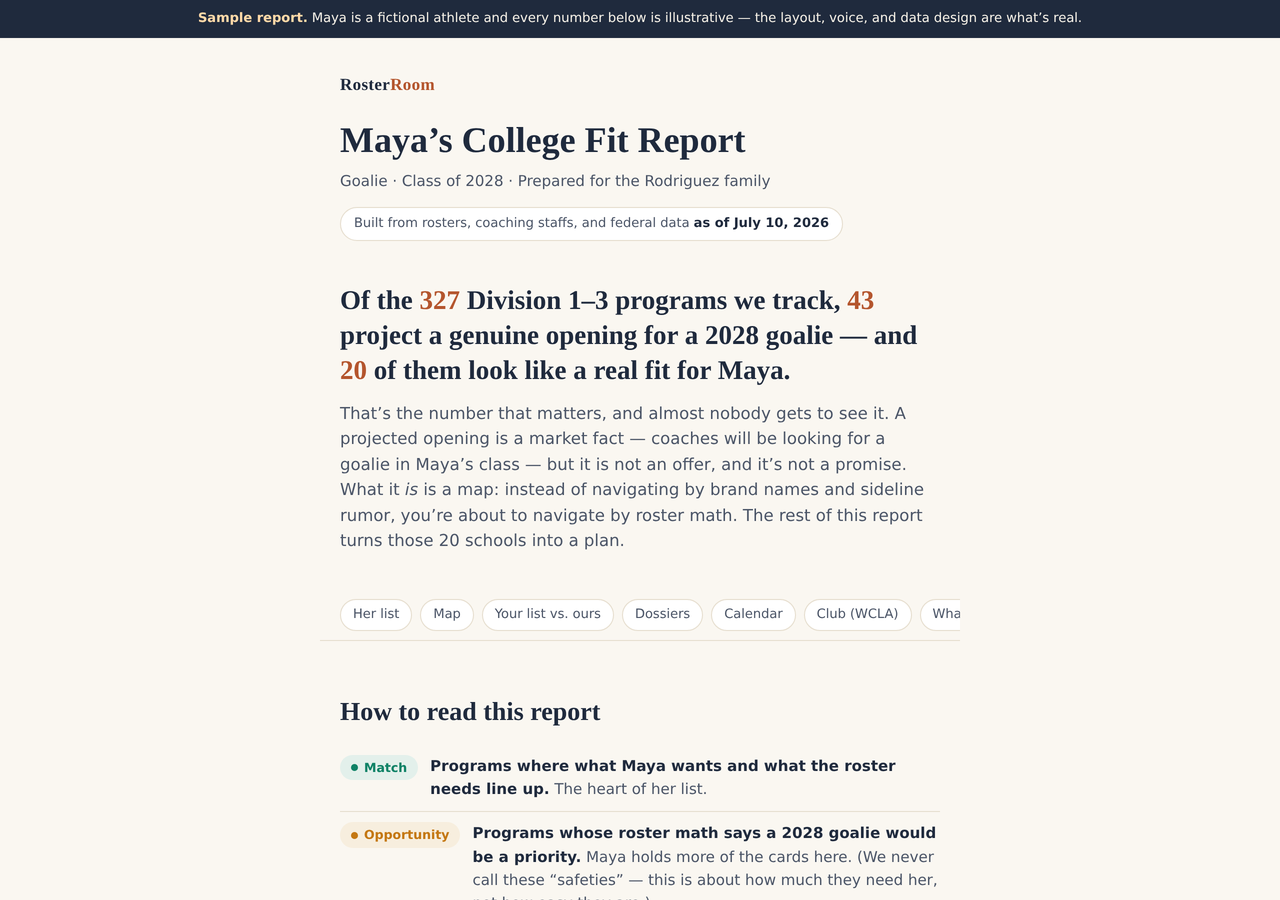
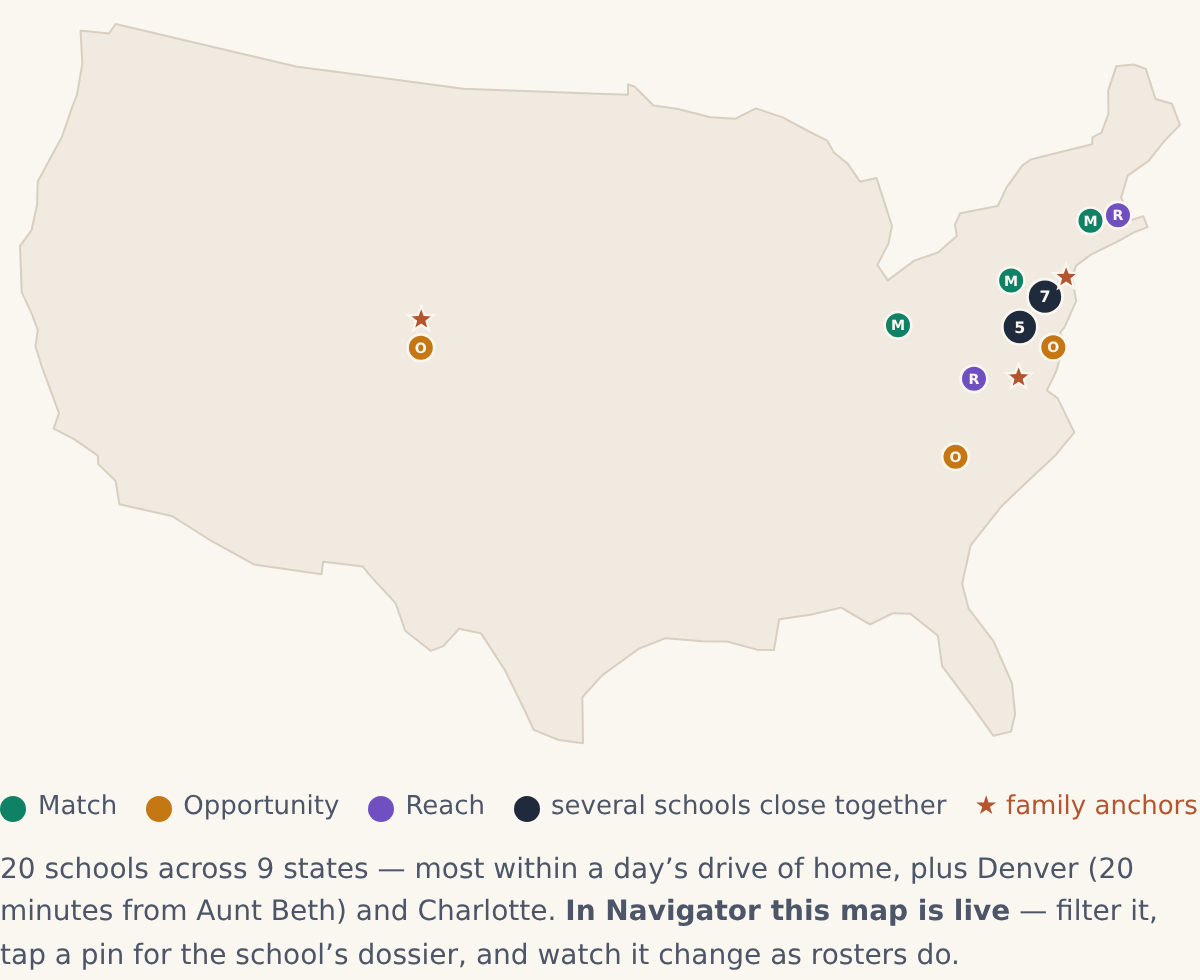
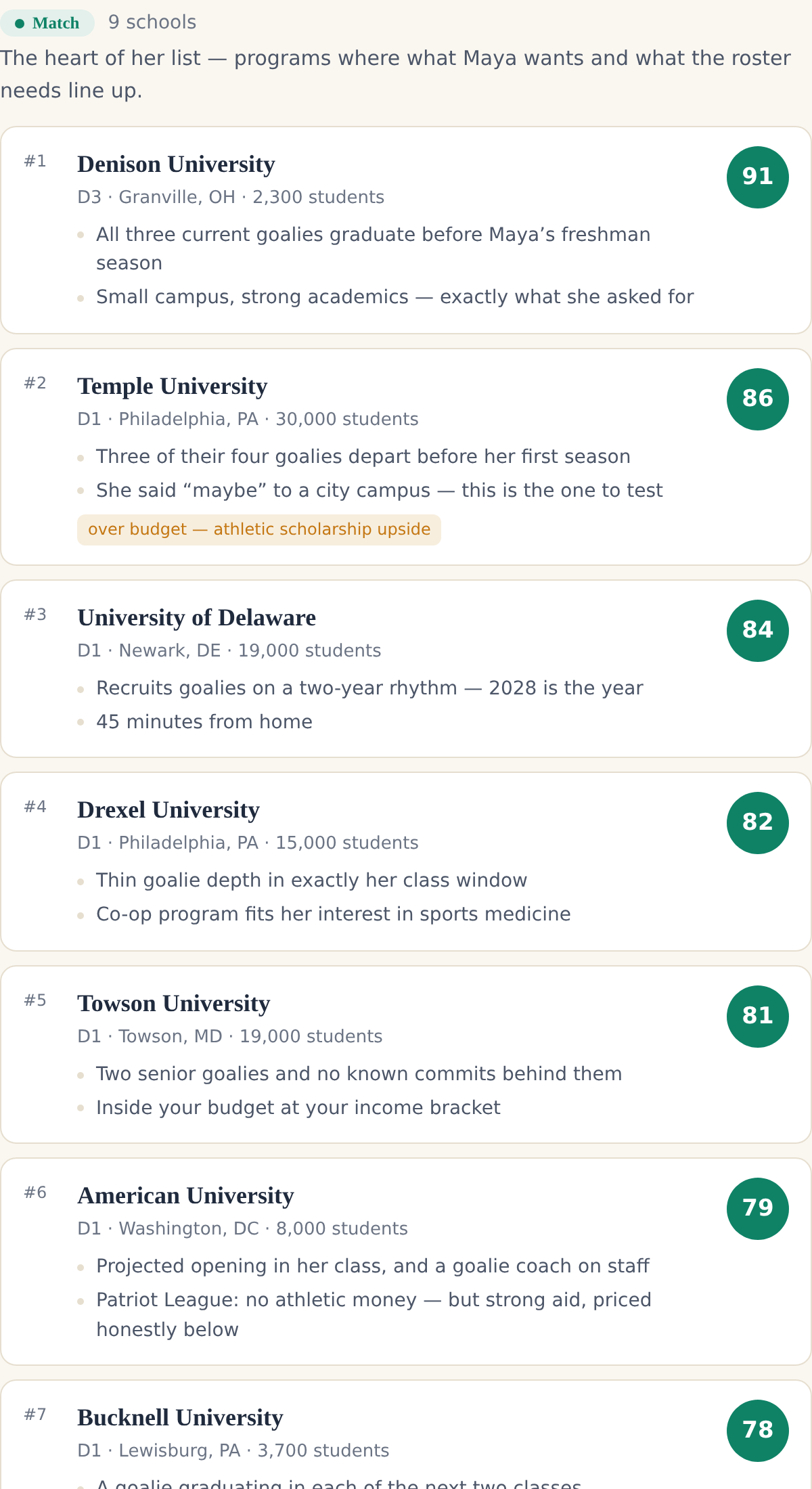
Software that reads college team rosters and coaching pages, keeps a history of how each one changes, and works out where real openings are likely to appear. It checks its own work 107 different ways before I trust a single number. Then it turns all of that into one report a parent can actually use: a ranked list of schools, sorted into plain categories, with a map, a one-page profile of each school, and a calendar of what to do when. RosterRoom is about to open to its first families.
Why this matters to your business
You are not recruiting a goalie. But your business has its own version of this problem: information you already have, or could have, that never becomes a decision because nobody has time to read it all. Quotes that were never followed up. Invoices aging quietly. Leads that went cold in someone's inbox.
RosterRoom is my proof that I can take a messy pile of scattered information and turn it into one page that tells you what to do next. The same habits show up in every client engagement: real sources behind every number, software that checks its own work, and plain English on the page.
Curious what your scattered information could become?
Book a 20 minute callHome · How it works · About · Plain answers · Contact · Case study: my own inbox